
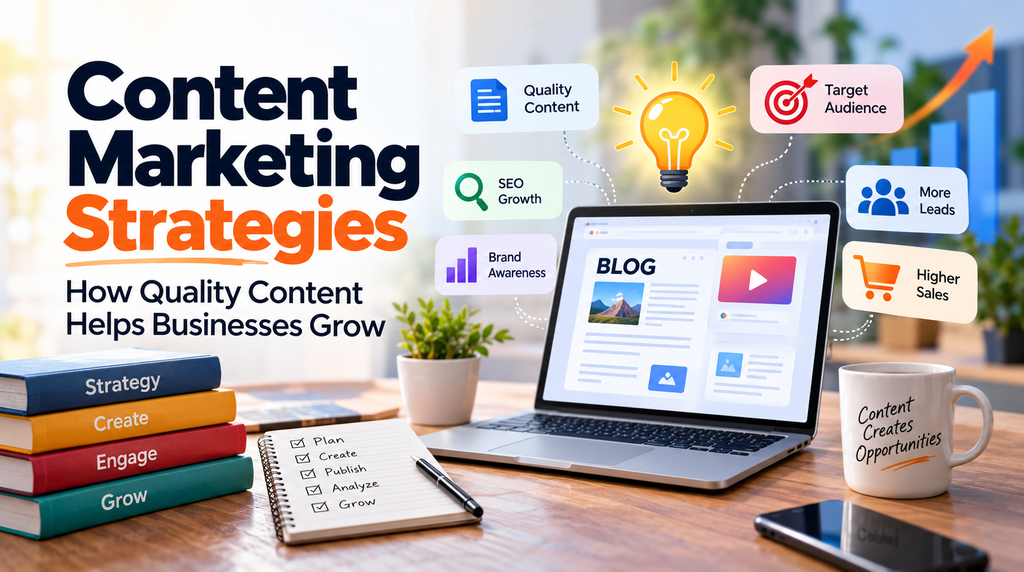
In today’s digital world, businesses must provide their customers with useful information to gain their trust and encourage action. These content marketing strategies can be used to create useful, relevant and engaging content to reach your target audience, increase brand awareness and overall create more leads.
Whether you’re a small or growing business, quality content can help you connect with your customers and create long term growth.
What Is Content Marketing?
Content marketing is a form of digital marketing that allows you to create valuable content to attract your target audience. Rather than directly promoting your products and services you offer useful insights.
For example, a digital marketing agency might have blogs related too SEO, social media and website optimisation to give readers some insight into how they can use these marketing techniques, whilst also highlighting their knowledge.
Some common forms of content marketing are;
- Blogs/articles
- Social media
- Video/tutorials
- Infographics
- Newsletters
- Case studies/guides
By picking the correct content formats, your business will be able to provide useful information to your customers through their preferred channels.
Why Quality Content Matters for Businesses
High-quality content aids companies in establishing good ties with their prospective customers. In addition, it aids in achieving important marketing objectives.
1. Enhances Search Engine Rankings
The objective of search engines is to offer helpful and relevant information to the users. Therefore, creating informative blog articles is a great way for companies to get organic traffic from search engines.
Not only does the use of appropriate keywords and descriptive titles enhance the content’s structuring, but also the use of internal links. Natural incorporation of keywords into the text is a must at all times.
For instance, companies that target customers interested in digital marketing can create content about SEO, website creation, and content marketing strategies.
2. Creates Brand Awareness and Trust
Customers will take notice of the company most likely to provide them with useful content and information. Various useful content such as practical articles and guides, as well as informative videos, ensure the company’s competence in particular area.
At the same time, content that answers most common questions helps customers to recognize and remember the brand easily.
3. Generate Leads & Boost Sales
Content marketing can help target your potential customers at different stages in their buyer’s journey. For example, they may begin by reading one of your blogs that identifies a problem. Then later read a detailed guide.
You can also provide appropriate CTAs throughout your content. These could be asking them to book a consultation, sign up to a newsletter or check out your service page.
By creating high quality content you will attract interested visitors who will then become a lead and eventually a customer.
Effective Content Marketing Strategies
By using the correct content marketing strategies, your business can create content that will help achieve your aims. Below are 5 content marketing strategies to try.
1. Know Who Your Readers Are
You need to know your audience’s needs, interests, and problems before creating the content. Find out their frequently asked questions and what they search for.
This will allow you to write relevant content instead of just publishing articles without any specific intention.
2. Write SEO-Based Blog Posts
Blogging is a good technique for passing knowledge and getting visitors organically. Start with finding good relevant keywords and selecting topics that suit the intentions of the audience.
Next, work on your content with the help of informative headings and paragraphs. Use short paragraphs and clothes that clearly depict the subject inside and refer to other trusted web resources with the help of internal links.
3. Publish Content Regularly
For businesses, consistency is a key to keep the audience engaged. Prepare a content calendar which is feasible in terms of blog articles, social media posts and other valuable resources.
As an example, a company could create one highly comprehensive blog on a weekly basis and then share the main points on social media channels.
A regular routine helps to feedback performance and track interesting topics.
4. Repurpose Existing Content
It’s time-consuming to make fresh content. Consider the efforts of reusing present material so it may be recycled into various other formats.
A detailed blog post, for instance, can be repurposed into the following: a short video, an infographic, an email newsletter, or multiple social media posts.
Therefore, while expanding their target audiences, companies will optimise their content creation process.
5. Measure Results
Keep track of your results so you can determine which pieces are providing a benefit. Track how much traffic your content is receiving on your website, engagement, search engine rankings, lead generation and converting.
Use this to improve the content that isn’t performing well and produce more content about topics of interest.
It could take a while to see any real results, so it’s important to keep checking your content’s performance and make changes based on the data.
Common Content Marketing Mistakes to Avoid
Content can produce limited outcomes, even when its value is unquestionable. To see better outcomes, it’s recommended to steer clear of the following typical mistakes:
- Publishing pieces of content without previously checking the audience.
- Practicing keyword stuffing in order to achieve high rankings.
- Taking information from other websites.
- Not paying attention to mobile usability and the overall experience.
- Not refreshing the old information.
- Neglecting to include proper calls to action.
Make an effort to concentrate on creativity, relevance, usefulness, and the ability to improve.
How to Measure Content Marketing Success
It tracks the performance of content and helps businesses understand if they are achieving marketing goals. The best metrics can be very different depending on the goal of each content piece.
Some metrics may tell you about the audience and how they relate to your website, as in the case of organic traffic and search impressions. Other metrics can tell you about interest and performance, as in the case of engagement, enquiries and conversion rate.
Google Analytics and Google Search Console to monitor your website and how it can be improved.
You can understand these metrics and how the report can benefit your content marketing strategy by analyzing the list of metrics below.
Conclusion
Successful content marketing techniques enable companies to reach the right audience, gain their trust, increase their presence online, and create potential leads. However, the success of your marketing strategies depends on your understanding of customers’ expectations and your ability to provide them with helpful information continuously.
To start, create a few helpful blogs and optimize them for search engines so that they get shared through useful channels. After that, check the results of your campaign and keep improving it with time.
Quality content is not only a way of marketing your business but also an opportunity to develop good relationships with clients and grow your business seamlessly.

2 thoughts on “Content Marketing Strategies: How Quality Content Helps Businesses Grow”