
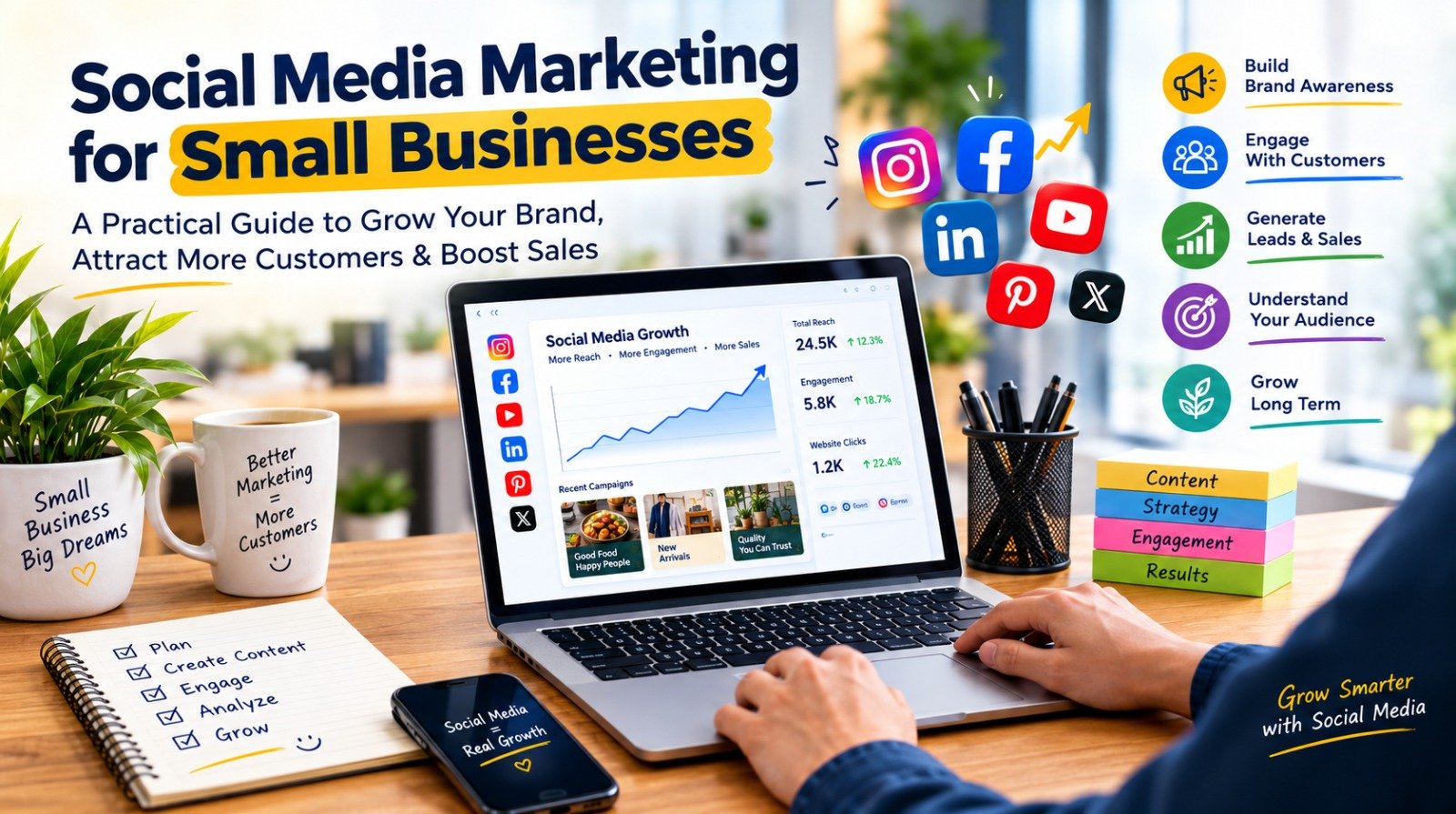
Think about when I saw a business on Instagram or Facebook. I might not have bought anything from that business. After looking at the business posts I started to recognise the business name, the business’s products or the business’s services. That is how brand awareness starts.
Having a website is important for a business today. Building a known brand in the media is also very important for a business. Instagram, Facebook and LinkedIn let a business talk to customers, share a business story and build lasting relationships.
Simply setting up social media accounts and posting stuff is not enough for a business. A business needs a message, branding, helpful content and regular interaction with a business audience.
In this guide we will look at how a business can build brand awareness on media and use Instagram, Facebook and LinkedIn to make a business more known.
What Is Brand Awareness on Social Media?
Brand awareness is about how people know a brand—what it does and who it is as a company. When people can recognize a brand by its name, its logo, its colors, its messages or its content that’s when brand awareness is growing.
– Posts that teach or explain something
– Videos and reels that catch attention
– Customer stories and feedback
– Sneak peeks and behind-the-scenes content
– Updates, on what’s happening in the industry
– Tips that’re actually helpful
– Interactive stories, polls and conversations
The goal isn’t to sell something in every single post. The goal is to build trust. The goal is to make people remember the brand. I want people to think of the brand when they need what the brand offers. I want the brand to be the thing that comes to mind. I want the brand to be the one that people trust. I want the brand to be the one that people choose. I want the brand to be the one that people remember.
1. Create a Consistent Brand Identity
Before you begin promoting your business in the media make sure your brand identity is clear and easy to recognize. Your audience should be able to identify your business before reading the account name. This happens when your brand’s visual style and communication tone stay the same across all platforms.
Start by choosing:
– A logo and a set of brand colours.
– A consistent brand communication style.
– A clear explanation of your products or services.
– A fitting profile. Cover image.
– A short and memorable brand message.
For instance if your company offers marketing services your content should show you know your stuff in SEO, online advertising, website development and growing businesses
Using the colours, fonts and messaging on Instagram, Facebook and LinkedIn helps build a familiar experience for your followers.
2. Increase Brand Recognition Through Facebook
Facebook keeps giving businesses ways to talk to customers, create groups of people who care about their products and share information. This helps both local businesses and big companies that want to reach more people.
Share useful and interesting content
A strong Facebook plan should have more than ads.
Try sharing a mix of:
Articles that teach something and updates about the industry.
Information about products and services.
Short. Stories from customers.
Announcements about the business.
Tips that are helpful and answers to questions.
For instance a local service company can post about what it does, answer questions customers often ask and show customer experiences.
Join Facebook Groups
Facebook Groups that are related to your business can help you meet people who already care about your field.
Or just putting up ads everywhere, taking part in the conversations and help answer questions.
Give info first. When it makes sense, tell people about your business as an option.
This can help people know your business and trust it over time.
Use Facebook Ads, in the way
Free posts help build connections and ads can help reach more people.
Facebook Ads let businesses make campaigns with goals, audiences and types of ads.
For ads that help people know your business focus on pictures that’re easy to remember, simple messages and content that explains what your business does.
Check how your ads are doing often and change your ideas based on what works.
3. Develop a Social Media Content Calendar
I have noticed that posting without a plan often leads to scattered posts. A content calendar helps businesses to organise ideas to keep a publish schedule and to cover every topic.
Day | Content Type Platform
—
Monday | Educational post | Instagram, Facebook
Tuesday | Industry tips | LinkedIn
Wednesday | Short educational reel | Instagram, Facebook
Thursday | Customer experience | Facebook, LinkedIn
Friday | Behind-the-scenes content | Instagram
Saturday | Industry discussion, | LinkedIn
Sunday | Weekly recap | All platforms
Content does not have to be posted on every platform every day. The content calendar keeps the schedule steady while the content calendar keeps the quality high.
4. Engage With Your Audience Regularly
Brand awareness is not about how many people see your posts. It is also about the relationships you build with them. When people comment on your content, ask questions. Send messages in a helpful and professional way.
Some effective engagement practices include:
Replying to comments and messages.
Asking questions in captions.
Sharing audience feedback, with permission.
Participating in industry conversations.
Responding to customer concerns.
Creating content based on asked questions.
Regular interaction makes your business feel approachable. It gives people chances to get to know your brand.. When people feel heard they are more likely to remember your brand. Over time this builds trust. Trust leads to loyalty.. Loyalty helps your brand grow.
5. Work With Influencers and Industry Creators
Working with creators introduces your business to people who have not yet heard about your products or services. This approach gives your business access to customers.
Choosing a creator only because the creator has many followers is not an idea. It can waste your business time and resources.
Think about the creator’s audience, the quality of the creator’s content, how much the creator’s followers interact with the creator’s posts. How related the creator is to your industry. These factors decide how much influence the creator can have on your business.
For example a skincare company might work with beauty creators while a software company might work with technology teachers or business experts. When the creator’s area of focus matches the product range of your business it makes the partnership more genuine.
The partnership should feel natural for the creator’s audience. Make sure to explain what your brand is about. Your brand messages must be straightforward and truthful.
6. Maintain Consistency Across All Platforms
One common mistake that businesses make is showing brand identities across platforms.
Your Instagram account might use one logo. Your Facebook page could have another design.. Your LinkedIn page might use different messaging.
This makes it hard for people to recognise your business.
To avoid this keep things in:
Logo and brand colours.
Business descriptions.
Contact details.
Tone of communication.
Core brand message.
Quality of published content.
You can change the format of the content to fit each platform.. The overall brand identity should still be clear and easy to spot.
7. Common Social Media Branding Mistakes to Avoid
Even businesses that post content all the time can struggle to build brand recognition if their plan has no direction.
– Posting, without a strategy: Random content makes it hard to give a brand message.
– Focusing on sales: Constant promotional posts can lower audience interest.
– Ignoring comments: Not answering people can give an impression of the brand.
– Using designs: Different visual styles can make your brand less recognisable.
– Copying competitors: Your business needs its own voice and identity, not just the brand of others.
– Ignoring analytics: Without reviewing performance it becomes harder to improve your strategy.
– Expecting results: Brand awareness grows through regular communication and audience interaction.
Conclusion
In the end it is clear that making people know your brand requires more work than just setting up accounts and sharing nice pictures. It is about making a clear and known identity. You must share content that has value, learn about the people who see your work and really communicate with them often.